 TR
 EN
 RU
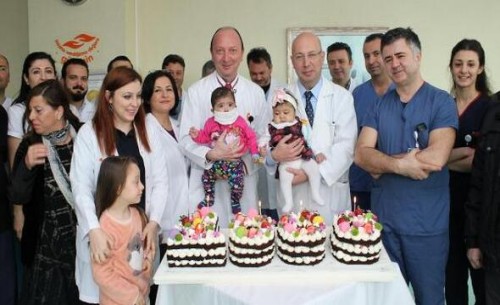
Transplant Count Passes One Thousand
In İZMİR, a proud “1000th case” milestone was reached at Kent Hospital, which launched its liver transplantation programme in July 2009. While the liver transplantation team shared this pride and happiness with its patients, Head of Department Assoc. Prof. Dr. Murat Kılıç said: “This number is not something easy to reach; it shows continuity and good results. Success matters more than numbers; in 2017 our survival rates reached 94 percent. And seeing our patients regain their health is the greatest reward.”
Assoc. Prof. Dr. Kılıç, noting that there are 4 centres in Türkiye that perform more than 100 liver transplants a year, one of them being Kent Hospital, said that the 1000 transplants they have reached are also significant in terms of medical statistics. Noting that Türkiye is among the top three countries in the world, together with South Korea and India, in living-donor liver transplants, Assoc. Prof. Dr. Kılıç said:
“We performed our first case at Kent Hospital 8.5 years ago. In that time, our youngest patient was 15 days old and our oldest patient was 72. At the beginning of March 2018 we performed our 1000th transplant. One third of this number are infant and child transplants. The number of babies under one year of age on whom we have performed transplants is 115. In our country there are around 2,000 patients every year who need a transplant, but 1,200 are actually performed. The number never goes down, because people die while waiting for organs, and new ones take their place. Unlike kidney patients, they do not have the chance of dialysis. There is a shortage of organs all over the world. This shortage is greater in our country, which is why we are obliged to perform 80 percent of transplants from living donors. The fact that organ transplants are performed free of charge in private hospitals under the SGK (Social Security Institution), the support of the state in this matter, the strength of family ties, and people volunteering as donors to give life to their relatives are the patients' great fortune. What really matters is to be able to find donations from deceased donors. The Ministry of Health is making great efforts in this regard. Awareness work is important. In deceased-donor organ donation, a rate of around 7 per million population per year has been reached. But in Europe this figure is 20–30 per million population. We need to bring donations up to these numbers.”
“ORGAN TRANSPLANTATION IS A MARATHON, IT IS TEAMWORK”
At the celebration marking the 1000th case, Assoc. Prof. Dr. Kılıç cut the cake together with his team, made up of Op. Dr. Cahit Yılmaz, Op. Dr. Kamil Kılıç, Op. Dr. Rasim Farajov, Op. Dr. Zaza Iakobadze and coordinator Gülay Aksu, and with their patients, and continued his words as follows:
“We can only get through this very difficult and long operation as a team. Living-donor liver transplantation is not an operation that one person can perform. Good results can be achieved only when two separate operations performed at the same time are both carried out with the same level of excellence. In our team the division of work is as follows: the recipient operation is mine, the donor operation is performed under the responsibility and supervision of Dr. Cahit Yılmaz, and the part in which the hepatic artery of the liver is sutured under the microscope using microsurgery is performed under the responsibility and supervision of Dr. Kamil Kılıç. We can describe liver transplantation as a marathon. It is not only the operation: the preparation and evaluation before surgery, as well as the care and follow-up after surgery, are also very important. Besides surgery, it must be carried out with a multidisciplinary approach, with the support of gastroenterology, anesthesia, radiology, pathology, psychiatry and all the other specialties whose consultation may be needed. We reached this success with such a team. For us at Kent Hospital, leaving 1000 cases behind is not something easily achieved; it shows continuity and good results. Success matters more than numbers, and in 2017 our survival rates reached 94 percent. Seeing our patients regain their health is the greatest reward. Mothers and fathers now celebrate their children’s transplant day as a birthday. It is a great joy to see transplanted babies and children grow up and go to school with their peers.”
